From cavefish to humans: Evolution of metabolism in cavefish may provide insight into treatments for a host of diseases
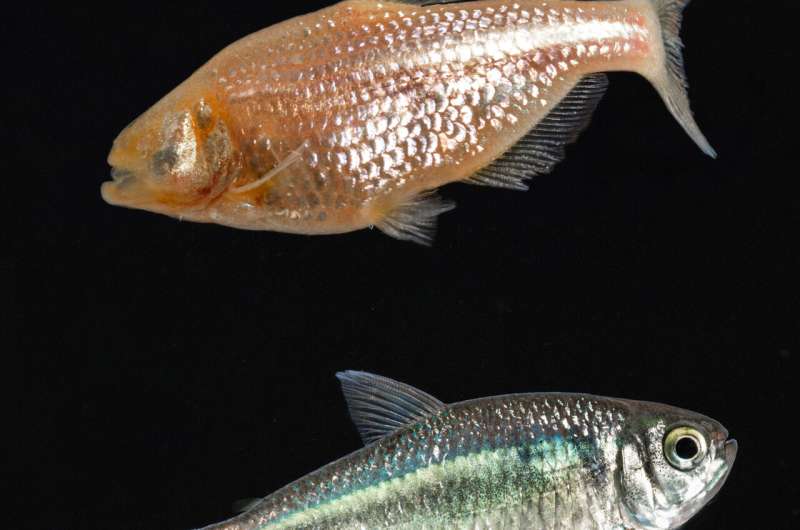
New research from the Stowers Institute for Medical Research examines how cavefish, surface-dwelling river fish that flooded into underground cave systems over 100,000 years ago, developed unique metabolic adaptations to survive in nutrient-scarce environments. The study, published online inNature Geneticson May 12, 2022, led by Jaya Krishnan, Ph.D., a senior research associate in the lab of Nicolas Rohner, Ph.D., created a genome-wide map of liver tissue for two independent colonies of cavefish along with river fish to understand how cavefish metabolism evolved and how this may be applicable for humans.
历史上,人类已经能够适应地g periods of feast or famine. Today, however, feast has replaced famine in many regions around the globe leading to a rise in a host of diseases related tometabolismsuch as diabetes, heart disease and stroke. Collectively calledmetabolic syndrome, these conditions are associated withgenetic mutationsin regions of DNA that regulate how our genes work to keep us healthy; on an evolutionary timescale, the constant "feast state" is in its infancy, which for humans, means disease rather than adaptation.
This study marks the first time genetic mapping of the non-coding regions of liver DNA that act to regulate gene activity and expression have been performed. The new data is a now valuable resource for thescientific communitystudying starvation resistance and metabolism.
"It's a very good foundation for us or anyone to now ask relevant questions in relation to metabolism, diet, and adaptation," said Krishnan.
Metabolism, or the way in which we utilize and store energy, is an integral part of health in all species. Cavefish are ideal for studying metabolism; during periodic flooding of caves, these fish intake and store all the nutrition they need to survive until the next nutrient inundation, which may not be for another year. "They can shed light onmetabolic disorderssuch as diabetes and obesity," said Krishnan, because, despite elevated fat andblood glucose levels, these fish remain vibrant and healthy.
"The fact that these fish are apparently healthy, despite having these extreme traits is, by definition, a good place to ask how they deal with that," said Rohner.
What is truly remarkable is that the two independently derivedcavefishcolonies examined in this study evolved strikingly similar metabolic adaptations to survive in dark, nutrient-scarce environments. This raises the question, what can we learn from animals who have had the time to evolve? And even further, if multiple cavefish populations evolved in a very similar manner completely independently from each other, are there universal adaptation mechanisms that could potentially be triggered in other species like humans?
"We know only a handful of genes that could be therapeutic targets," said Krishnan. "This means we need to adopt novel ways to identify such potential genes so that we can investigate them, and cavefish are a very powerful system for us to do that."
Coauthors include Christopher W. Seidel, Ph.D., Ning Zhang, Ph.D., Narendra Pratap Singh, Ph.D., Jake VanCampen, Robert Peuß, Ph.D., Shaolei Xiong, Alexander Kenzior, Hua Li, Ph.D., and Joan W. Conaway, Ph.D.


