Differences in children's behavior predict midlife health behaviors
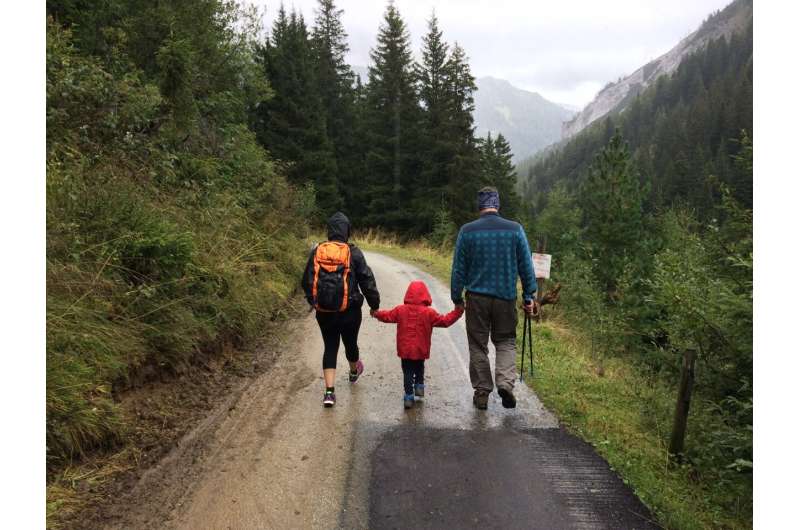
A recent study by the Faculty of Sport and Health Sciences at the University of Jyväskylä and the Gerontology Research Center (Finland) investigated the paths from childhood socioemotional behavior to midlife health behavior decades later. Socioemotional behavior at age 8 predicted health behavior both directly and indirectly through education.
There are a wide variety of factors behind health behavior and one of them is personality. Differences in behavior and response style between individuals are already visible inyoung children. A recent paper examined the role of socioemotional behavior in children in relation tophysical activity, smoking,alcohol consumptionand body mass index assessed up to 42 years later.
Well-controlled behavior in girls, indicating a tendency to behave kindly and constructively in conflicting situations, predicted more physical activity in middle age. Social activity, which was seen, for example, as an eagerness to talk and play with other children, predicted heavier alcohol consumption in girls and smoking in boys.
"Well-controlled behavior may appear as good self-discipline and the ability to follow the exercise plans in adulthood," says postdoctoral researcher Tiia Kekäläinen. "Social activity, on the other hand, may have led later tosocial situationswhere smoking and alcohol consumption were started."
The educational path matters
一些儿童社会情感之间的路径性能变化or and midlife health behaviors went through education. Social activity in girls and well-controlled behavior in both girls and boys predicted better school success in adolescence and higher education in adulthood. High educational achievement was linked, in turn, to less smoking and alcohol use.
"The results are in line with previous results based on this samelongitudinal dataand other studies," says Kekäläinen. "In particular, well-controlled behavior has been found to contribute to school success and education. These may provide information and skills that help to make healthy choices. The results of this paper suggest that differences in individuals' behavior already visible in childhood are reflected in adulthood both directly and through various mediating mechanisms."
The study, published inPsychology & Health, was part of the Jyväskylä Longitudinal Study of Personality and Social Development (JYLS) in which the same individuals have been followed since 1968 when they were 8 years old. This study used data on socio-emotional behavior and parental socioeconomic status at age 8, school success at age 14, educational background at age 27, personality traits at age 33, and health behaviors at age 36, 42, and 50.
Explore further


